Wildcraft Group / Simulation product
Ghostlight.
Rehearse the attraction.
Then build it.
Ghostlight is a product for rehearsing a show, a ride or a whole park from its documents, so the faults between systems turn up while they are still lines on a page. I designed and built it: four tools, the model they share, the sign-in and the page that explains the engine.
Visit wildcraftgroup.com
The product
Four tools.
One model.
All four read and write the same model, so a number revised in one changes what the next one finds. Everything below is the actual interface, working on a fictional coaster. Its results are illustrative.
01 / Gather
Start with
what exists.
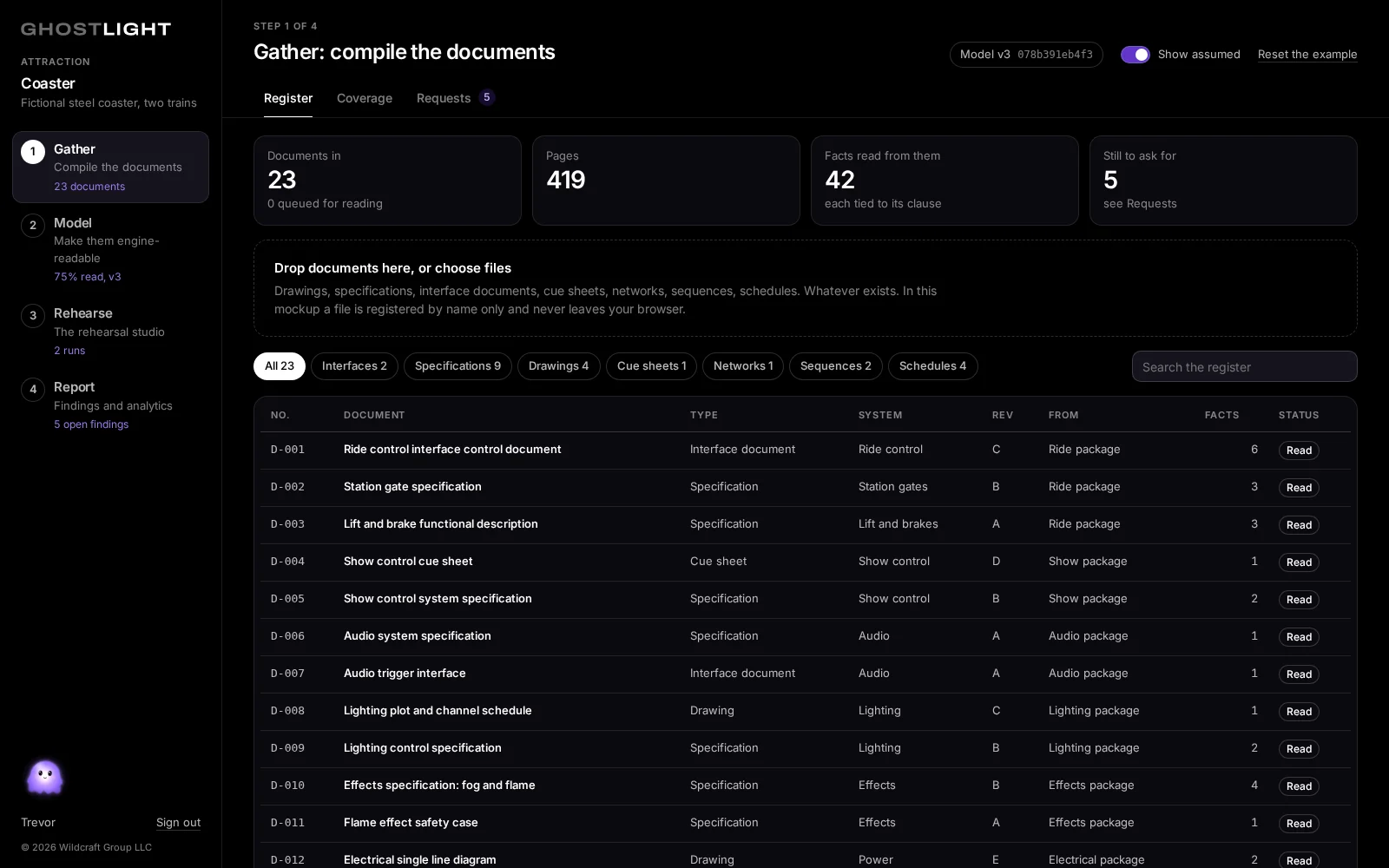
Drawings, specifications, cue sheets, schedules. The register tracks every document, its revision and who supplied it, and shows where the set is still thin. In this version a file is registered by name only. Nothing leaves the browser, and the interface says so.
02 / Model
Every number
beside its clause.
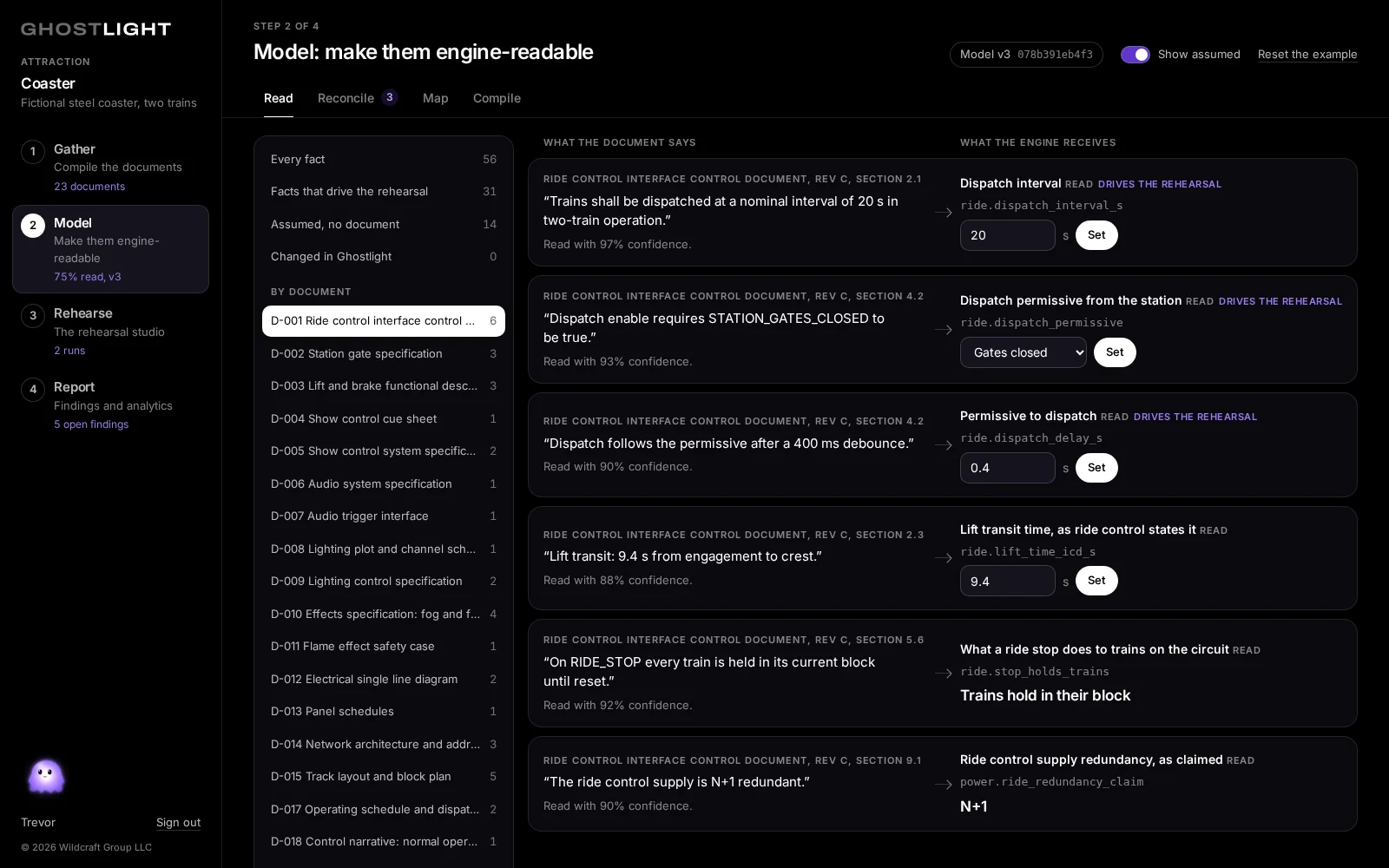
Model turns documents into facts an engine can read. Each fact sits next to the sentence it was read from, with its confidence. Disagreements between documents are reconciled in the open, and eight admission checks run before anything compiles. A compiled model carries a SHA-256 hash, so a run always names exactly what it ran on.
03 / Rehearse
Run it. Then follow
one fault down.
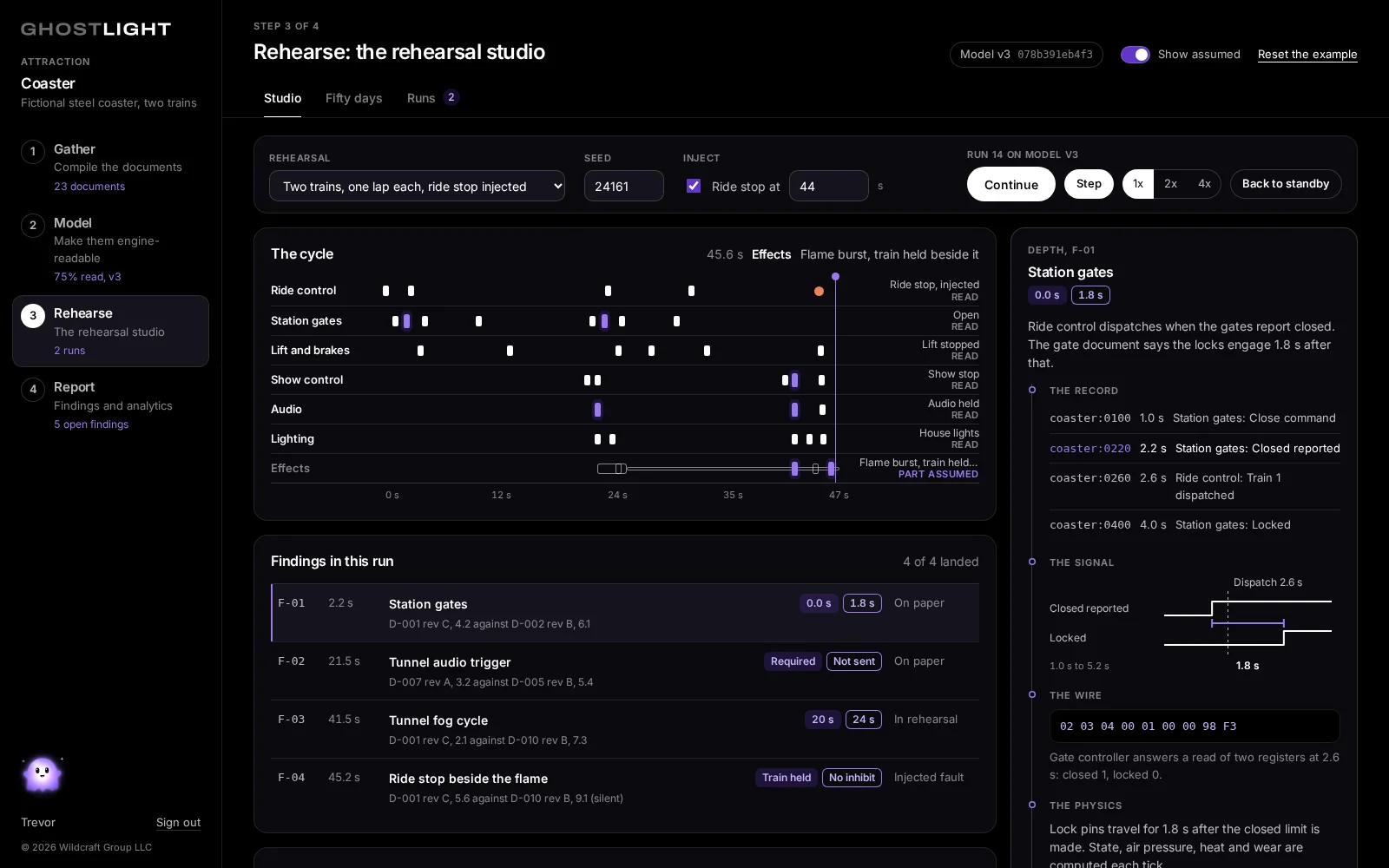
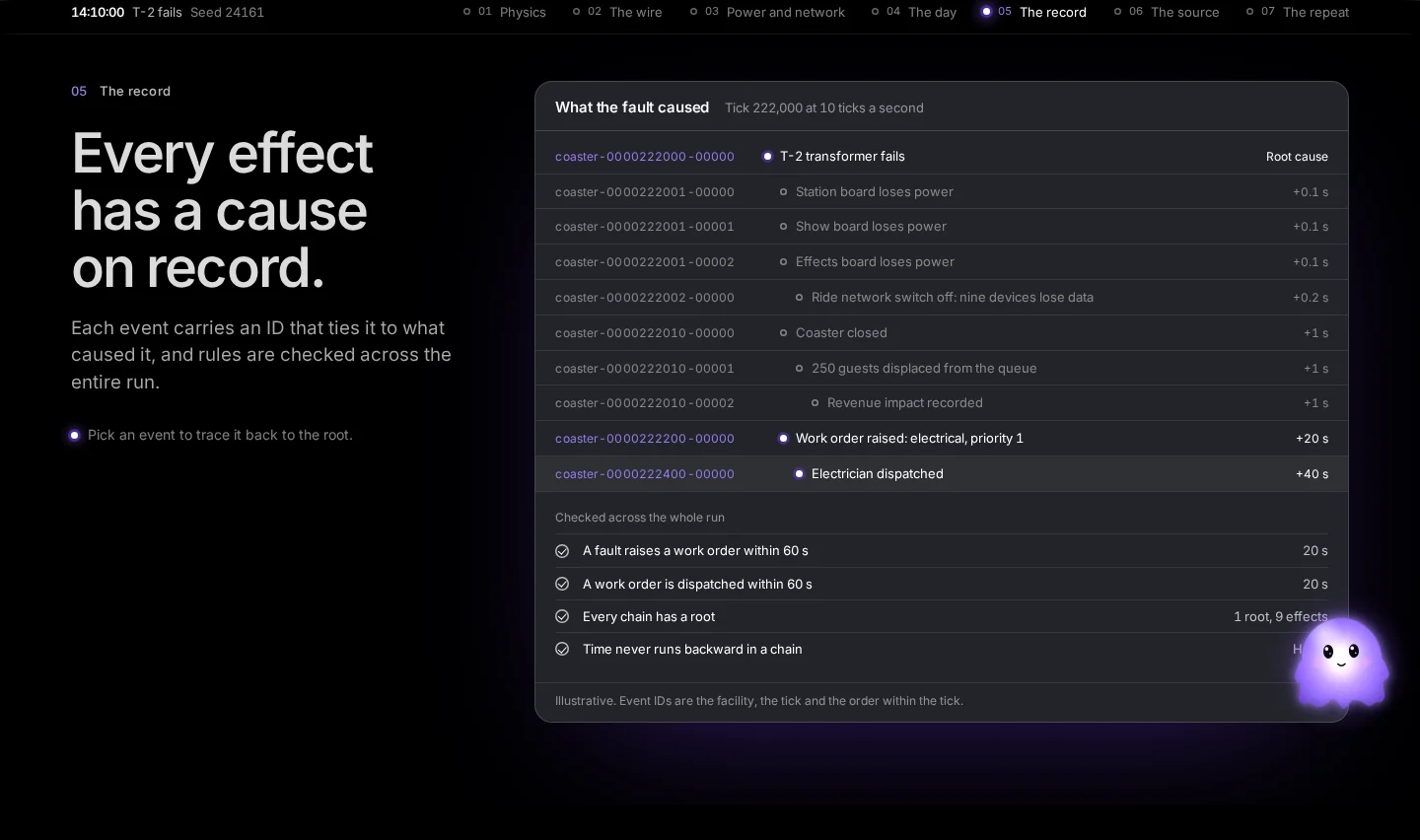
The studio runs the attraction on a seeded clock, with a ride stop you can inject at any second. Findings land as the run crosses them. Pick one and it opens downward: the record of what caused it, the signal, the bytes on the wire, the physics and the clause it came from. A fifty-day sweep shows which findings hold.
04 / Report
Findings
with an owner.
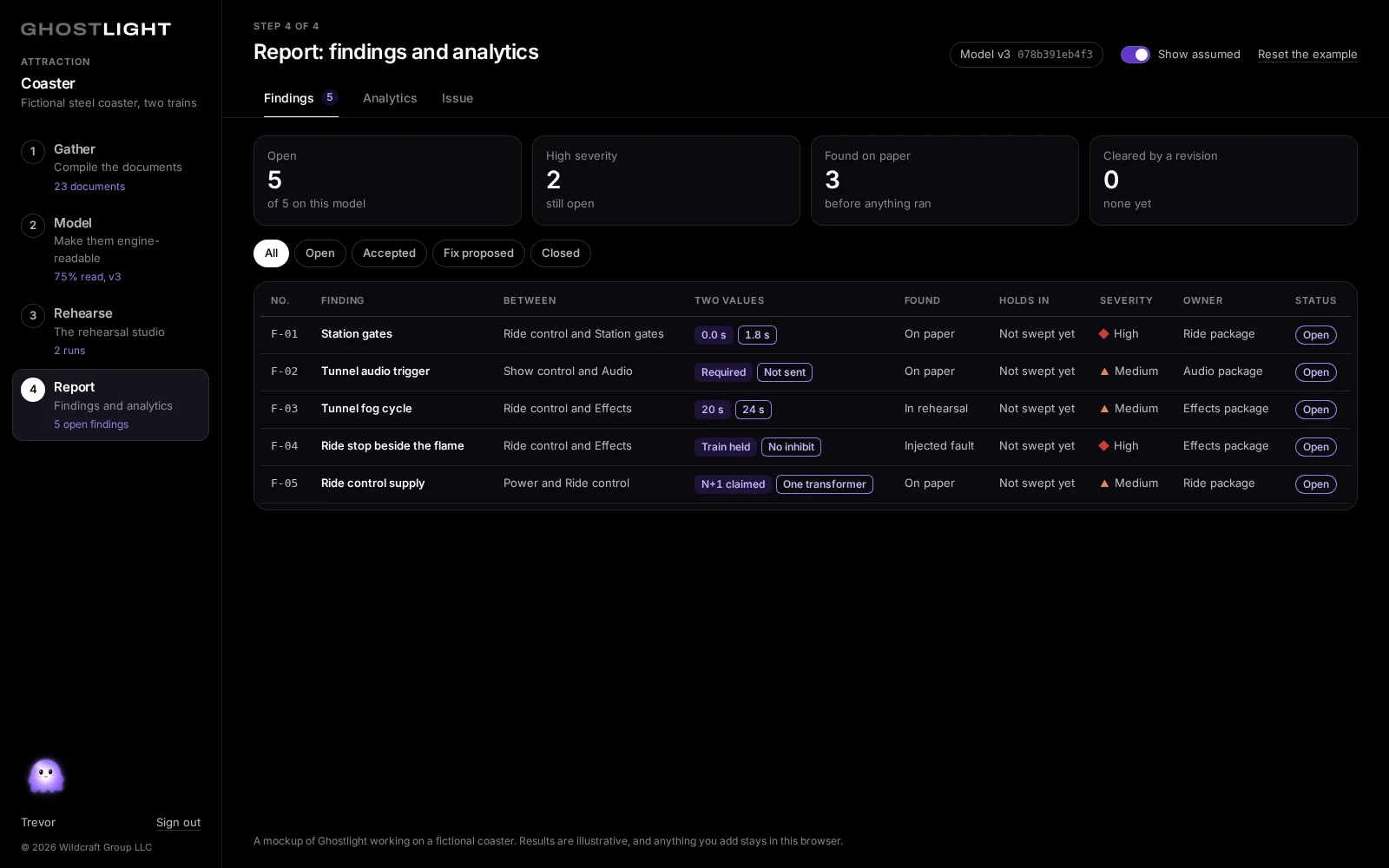
Every finding names the two values that disagree, the systems between them, where it was found and who owns it. Dispositions move it from open to closed. The issue prints, and the ledger exports as CSV.
The engine, explained
One moment.
Seven depths.
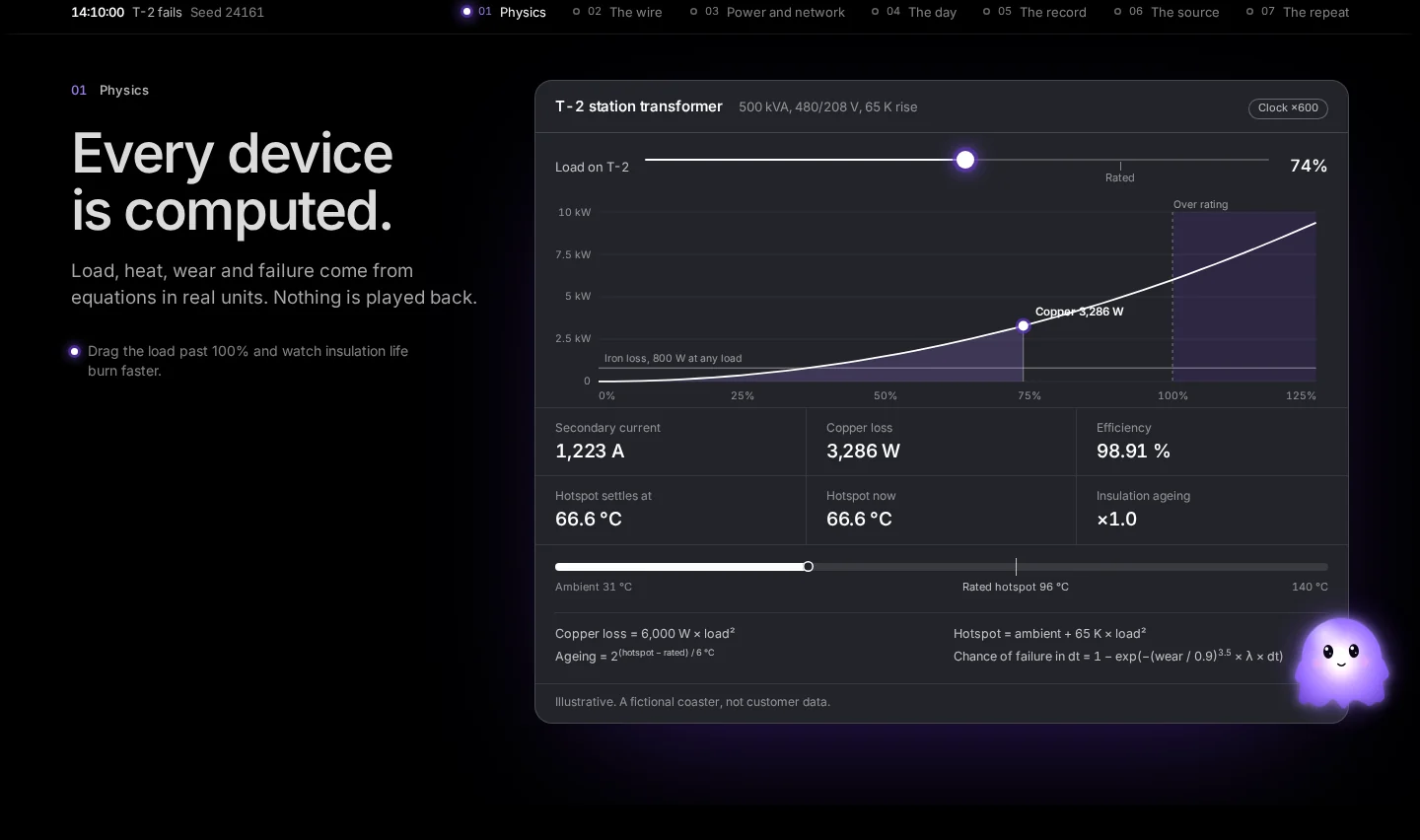
A rehearsal is only worth trusting if you can see how deep it goes. So the engine has a page of its own: one transformer failing on one rehearsed afternoon, followed down through physics, the wire, power and network, the day, the record, the source and the repeat. Every instrument on the page works out what it shows, from the transformer’s losses to the checksum on a Modbus frame.
Backend & infrastructure
A door that
stays shut.
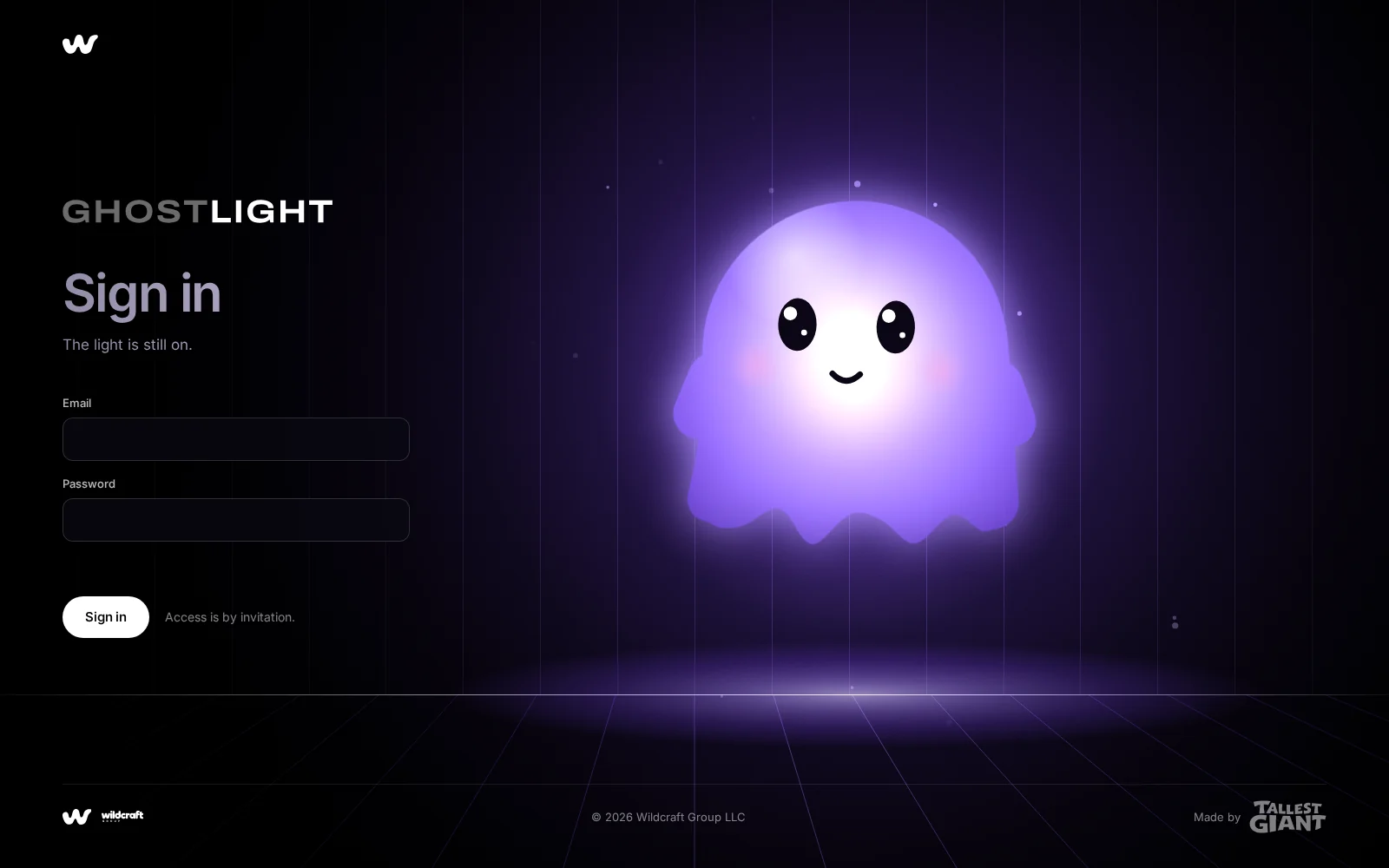
Ghostlight is invitation-only, so the sign-in is part of the product. I built it on Cloudflare Pages Functions and a D1 database.
- Accounts by invitation.
- There is no sign-up form. An operator issues a one-time link that expires, and issuing a new one retires the last. Passwords are stored as salted PBKDF2 hashes, and sign-in attempts are rate limited.
- Sessions the server can end.
- The browser holds a host-locked, HTTP-only cookie. The database holds only a hash of it, so a person’s sessions can be revoked at once. Everything except the sign-in pages sits behind one gate.
- Managed from my own desk.
- Accounts are managed from Tallest Giant’s operations desk over a token-protected machine API: invite, disable, recover, revoke. Links are handed to the operator rather than emailed, and every action lands in an audit log.
Next project